

How it works
The whole model on one page — shown with the real screens you'll play on.
The game
Rock-paper-scissors, 1v1, for real money — in two modes: Best of 5 (the skill mode) or a single One throw.
Best of 5: each player has a 6-card pool (2✊ 2✋ 2✌) and orders 5 of them (leaving one out); first to 3 round-wins takes the pot, over 5 rounds. All 5 played with no one at 3 → most round-wins takes it; a true tie is a draw. One throw: a single simultaneous card — fast and pure luck, but it earns half the leaderboard points (Best of 5 pays full). Card counting only matters in Best of 5.
Two ways to play
Bring your own stake — you never see your opponent's. This is the actual screen you play on:
Order 5 of your 6 cards. Played round by round.
Shuffle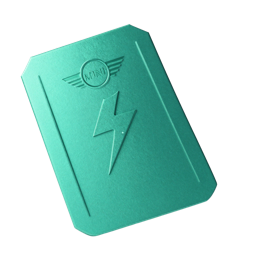 Big bet
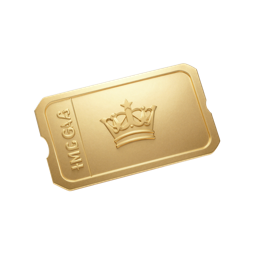 Each game+1 MEGA
Pre-order your cards, post to the pool, and leave. It resolves automatically when someone matches. This is the liquidity that lets others play instantly — and while it rests it drips jackpot tickets hourly (MINI common, rare MEGA) — faster in busy arenas and the longer it rests (×1.5 after 6h, ×2 after 24h), capped at 5 MINI + 1 MEGA per pool per day, up to 72h per order.
Tap Play now and pick one: Match live — real-time card-by-card vs an online player, nothing to preset; or Battle from orders — set your 5 cards and instantly take a standing bet, earning ×1.25 leaderboard points; clear an order resting 24h+ for a +1 MINI bounty. Either way, count cards and read the hand. The skill mode.
Whoever posts the larger order is the bigger bettor and earns a random ×1.0–2.0 on their leaderboard points that game — win or lose. The smaller bettor gets none. It only grows points, never who wins.
The pool shows how many orders are waiting in each mode — not who, and never the stake. Both sides are sealed before matching, so nobody can pick a soft opponent.
Where the money goes
The winner is paid from the pot — the platform takes a flat 6% rake and never takes a side of the bet.
The 6% rake — exactly where it goes
Rare big jackpot. 70% of the jackpot share.
Frequent small jackpot. 30% of the jackpot share.
80% to the current season's two leaderboards, 20% set aside up front to seed the next season. All of it flows back to players.
Memecoin arenas only. Queued live in the arena, batch-burned to the dead address monthly — every burn verifiable on-chain.
Operating revenue (3% in USDT arenas). Referral is paid from here: your tier's % of this share is split 70/30 between inviter and friend — never stacked on the player.
So of every pot: 2% feeds the jackpots, 1% funds the season prize pool (both leaderboards), in memecoin arenas 0.5% is queued for the monthly on-chain burn, and 2.5% is platform revenue (3% in USDT arenas) — with referral paid out of the platform share. On a draw the 6% is still taken (no free games); the rest is split back. Any amount you bet above your opponent is refunded instantly at match time — never raked.
Why a low effective edge?
The rake is 6%, but roughly half of it flows back to players — 1% through the reward pools and 2% through the jackpots — leaving a ~3% effective edge as the real long-run cost of playing. Our model shows profit-per-player is roughly flat across the 5–9% nominal range; a higher edge just makes players quit sooner. 6% nominal keeps players surviving long while the platform's margin sits near its healthy peak.
Monte-Carlo, 6,000 runs per point. As the rake climbs, players quit sooner (green falls). Platform net weighted by retention (gold) plateaus across 5–9% — pushing higher barely earns more but bleeds players. 6% sits in that plateau while keeping the longest player lifetimes.
Real utility for memecoins
Any memecoin opens an arena. Four ways it wins:
Members duel with your token
Every game queues 0.5% of the pot — batch-burned to the dead address monthly, tracked live in the arena with verifiable transactions
In-app buys create recurring demand
Rake feeds your token's MEGA + MINI pools
Two jackpots, every arena
Every pot puts 2% into the jackpots — split 1.4% into MEGA and 0.6% into MINI. Exactly what you see at the top of each arena:
Both are drawn with verifiable on-chain randomness (Chainlink VRF) and each pays out 80% of the pool, leaving a 20% seed so the headline number never resets to zero. Tickets come from playing (both players +1 MEGA per game; the bigger bettor +1 MINI), from resting orders (hourly drip while your order waits), from taker bounties, and from daily tasks (e.g. win 10 matches → +1 MEGA) — they are draw weight only and never touch the pot. Prizes are credited to your platform balance — withdraw to your own wallet anytime.
Two ticket types — how you get in
Every game you play gives both players +1 MEGA ticket. Not for sale. Drawn at each 3-month season's end: 10 winners, weighted by tickets, split by rank.
The bigger bettor in a match earns +1 MINI ticket, or buy them directly. Every game has a ~0.1% chance to fire a MINI draw of 5 winners: the triggering match's winner takes prize #1 and the loser #2 (in a draw, the bigger bettor is #1); the other 3 are drawn from ticket holders by VRF. Fewer than 5 holders → the unfilled prizes aren't paid, the guaranteed pair is unaffected. Miss? Tickets carry over and keep stacking.
How the MINI drop works
Random, not scheduled — every match rolls the dice. When it fires, both players of that match are guaranteed a top-2 place (winner #1, loser #2; in a draw the bigger bettor is #1) and three more winners are drawn from MINI-ticket holders. The longer nobody wins, the bigger the pool. Play more, hold more tickets, win more.
Each settled game has a ~0.1% chance to trigger a MINI drop for that pool.
Nobody wins, no one loses tickets. The pool and everyone's odds keep growing.
Chainlink VRF picks 5 winners (ticket-weighted). Pays 80%, then all MINI tickets reset — the race starts fresh.
Prize splits by rank
MEGA pays 10 places, MINI pays 5 — each rank takes a share of the 80% payout.
Buy MINI tickets — 40% flows back to the pools
Besides earning MINI tickets by betting big, you can buy MINI tickets directly (1 ticket = $1 of the arena's token). Every purchase is split — and a big chunk goes right back into the prizes you're playing for:
70% of the recycled 40%.
30% of the recycled 40%.
Swept to USDT treasury.
So of every $100 of tickets sold: $28 grows MEGA, $12 grows MINI, and $60 is platform revenue.
Why buying tickets can't be gamed
The draw is a ticket-weighted lottery, and only 40% of ticket spend re-enters the pool — so the expected value of a bought ticket is capped well below its price:
Let pool V, total tickets T, your tickets t, ticket price P = $1. A weighted draw returns you ≈ (t / T) · V.
- If V comes only from tickets: V ≈ 0.4 · T · PEV = 0.4 · t · P
- You paidt · P
- Your expected loss (house edge)60%
Rake and sponsor money add to V, nudging EV up — but to capture it you must own most of T, and buying your way to ~100% of tickets costs about 2.5× the whole pool (you pay P per ticket while only 0.4·P re-enters). Dominating is strongly negative-EV; the platform is net-positive at every purchase size. Same red line as our per-game rake: every incentive feeds the pool and the treasury, never drains them.
Rewards — paid from the rake, never printed
The 1% reward pool from every rake is split three ways — funded by real play, never minted. Each pool is kept per token: a USDT-arena rake funds a USDT reward pool, a meme-arena rake funds that meme's pool, and every payout is made in that pool's own token — no forced conversion, no FX risk.
Two boards, split 50 / 50: the MMR board (pure skill, ranked by rating) and the Wager board (volume over the 3-month season — matched stake's USDT value × 100 × win 1.0 / loss 0.2 / draw 0.5, bigger bettor ×1.0–2.0). A One throw match earns half the wager points — Best of 5 pays full, to reward real play over coin-flips. Each board's Top 10 split by rank [30/18/12/10/8/6/5/4/4/3%], paid at season end in each pool's own token. Ranks nobody fills roll into the next season.
Taken out up front, every match — not at payout. So the moment a new season starts the pool is already funded instead of resetting to zero, and there is something to play for from day one.
Rewarded instantly — leaderboard points and MEGA / MINI tickets the moment you complete one. Daily tasks take no share of the pot; they never dilute the prize pool.
Every payout comes from the pool that real rake already funded — the platform never prints tokens or pays from its own pocket, so the reward system can never run a deficit. Referral (below) is separate, paid from the platform's own 3% share.
You post $100, your opponent posts $20. You match at $20 (the lower amount — your extra $80 is refunded, never at risk), and because your order was larger you're the bigger bettor. Base = $20 × 100 = 2,000; this game rolls a ×1.7 multiplier (yours only):
The multiplier only touches points, never the payout or who wins. Its expected value rises with the matched bet, with no tier cliff — so the incentive is always to bet bigger. A draw still rakes 6% and still scores, so wash-trading only feeds the platform.
Referral — both sides earn, every match
Every match your friend plays, your tier's % of the platform's own share — the 3% of the pot it keeps (2.5% in memecoin arenas, the difference funds the burn) — is split 70/30: your 70% and their 30% both accrue as claimable earnings, every match — each side claims once a day. Joining through a link is strictly better than joining without one.
Tiers count only friends who have played in the last 30 days. Bring people in and go quiet and your rate falls back on its own; a friend who stops playing pauses that stream until they return. Claiming is once per day per coin. Referring yourself is still a net loss — you'd pay the full rake to earn back a sliver of it.
Worked example (Bronze, USDT arena): $50 a side → $100 pot → $6 rake → $3 is the platform's share → you get 7% = $0.21, your friend gets 3% = $0.09. At Diamond the same match pays you $0.84 and them $0.36.
The 6% rake, split — with referral
Every pot is raked 6%. Nothing is stacked on top — jackpots, reward pools and referral all come out of that one 6%:
- Winner paid94%
- → MEGA jackpot1.4%
- → MINI jackpot0.6%
- → Reward pools1.0%
- → Burn (memecoin arenas)0.5%
- → Platform2.5% (USDT arenas: 3.0%)
Minimum stake: $5-equivalent per game. In memecoin arenas 0.5% of every pot accrues to a burn queue shown live in the arena, then batch-burned to the dead address on the 1st of each month — every burn has an on-chain transaction anyone can verify. The platform funds it from its own share, so the player's cost never changes.
- → Referral base (the platform's share)3%
- → Paid out at Diamond (40%, split 70/30)1.2%
- → Platform net1.8% (meme arenas: 1.5%)
Referral is paid from the platform's own share — never stacked on the player. Both sides earn on every match — inviter and friend each accrue claimable earnings, claimed once a day per coin. Even at Diamond an inviter earns back only a sliver of the 6% rake their friend pays, so self-referral never pays. The 1% reward pool + 2% jackpots still mean roughly half the rake flows back to players.
Provably fair
How off-chain settlement stays honest
Matching and rounds run off-chain for instant, gas-free play — so the trust question is: can the result be faked? It can't, and here's the exact chain of evidence:
Each move is submitted first as a SHA-256 hash of (move + secret salt). Only after both players have committed does either side reveal. The server checks every reveal against its earlier hash — a mismatch is rejected, so no one can change a move after seeing the opponent's.
Who wins each round is pure rock-paper-scissors math on the revealed moves — no server randomness. Every commit, reveal, salt and settlement is stored, so any game can be independently recomputed and audited after the fact.
Timeouts never forfeit money: if a player disconnects, the server plays a random remaining card from their own hand and the game finishes normally. The stake stays in play until a real result is reached — it is never confiscated. Every balance change is double-entry: a ledger row is written for each credit and debit, and the solvency invariant (next section) cross-checks the total against the on-chain vault.
What MMR is
MMR (matchmaking rating) is your skill score — a standard Elo rating, the same system chess and competitive games use. Everyone starts at 1000. After each match:
Beat a stronger opponent and you gain more; lose to a weaker one and you drop more. It does two jobs: it matches you against similar skill (protecting newcomers from sharks) and it's the skill axis of the leaderboard — the MMR board ranks by it directly, and it's the competitive half of what makes a good player stand out. MMR never touches your money or who wins a round; it only reflects results.
How your money moves
Three stages keep play instant while the money stays on-chain and yours to withdraw.
Send USDT or a memecoin to the escrow vault. It's credited to your in-game balance after on-chain confirmations.
Matching, moves and settlement happen instantly off-chain — no gas, no signing every round. Balances are the single source of truth.
Cash out to your own wallet with a signed voucher. Per-tx and daily limits, new-account cooldown, and a solvency check gate every payout.
A solvency invariant runs continuously: on-chain vault balance must always cover off-chain liabilities (balances + jackpots + pending withdrawals + accrued burns). If it can't, withdrawals auto-pause. Amounts don't match → nothing pays out.
Roadmap
Risks & disclaimer
This is a game of chance with a skill element. Over time, players collectively lose the ~3% effective edge — never wager more than you can afford to lose.
Memecoin arenas carry the price risk of the underlying token; jackpots are denominated in that token (USDT-equivalent shown for reference). Smart-contract, bridge and regulatory risks are real. Availability may be restricted in some regions.
Nothing here is investment advice. The platform issues no security or governance token; there is no promise of financial return. Play responsibly.
A game of chance with a skill element; over time players collectively lose the ~3% effective edge. Play responsibly.